


The 2018/19 campaign was undoubtedly a successful one for Crystal Palace. They finished 12th and claimed some impressive scalps over the course of the season.
Not only was the finish good, but the underlying numbers were excellent too. Palace ranked seventh in expected goals and ninth in expected goals against. Many are not fans of these statistics, but what they show is that Crystal Palace were creating better opportunities than most teams while limiting them to lower percentage shots at the level of a top-half team.
What let Palace down last year was consistent finishing; their striking woes over the years are well documented. Roy Hodgson countered this problem by playing a fluid system that put Wilfried Zaha in the front two. This meant they had a dynamic runner and creator who could create space and open up gaps through the middle for Hodgson’s infamous narrow midfield to exploit.
This system was good and often made up for the lack of a striker. Despite Hodgson’s nous, the problems were still notable, though. In a combined 66 appearances, Christian Benteke, Jordan Ayew, Alexander Sorloth and Connor Wickham managed five goals. Michy Batshuayi somewhat cured these concerns when he joined, as he scored six goals in 12 games. Sadly, Palace did not bring the Belgian back, and they didn’t manage to sign a striker at all. They brought in a central defender, two more box to box midfielders and Ayew returned.
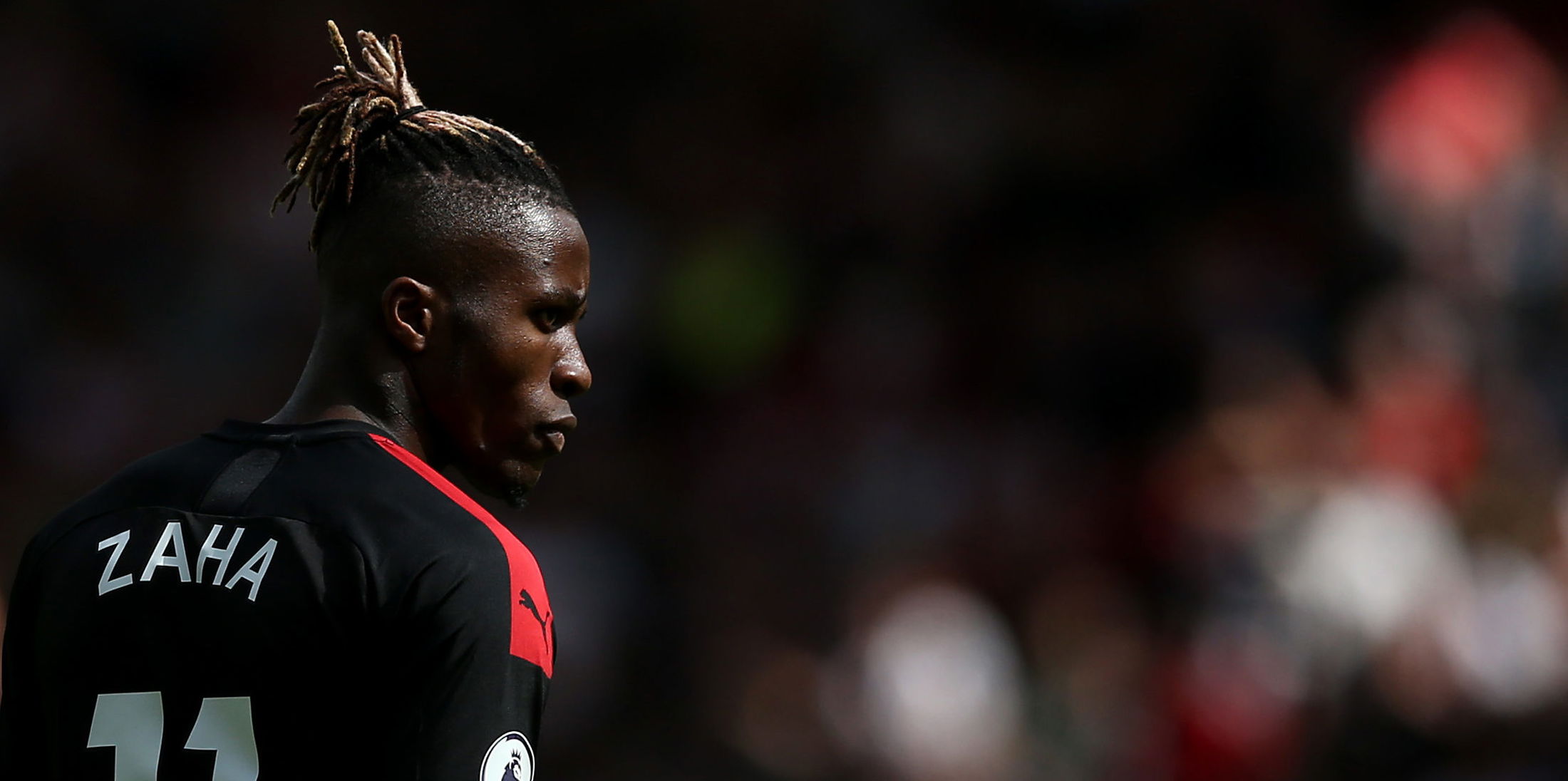
The summer was highly disappointing and led to many knocking Palace far down in their prediction tables. Personally, I feel there is enough solidity in this team for them not to be finding themselves in desperate trouble. The display on Sunday was highly worrying, though, and part of me has to wonder whether Hodgson’s 4-4-2 has maybe been found out, and exposed by more creative systems such as Sheffield United’s.
I’m aware we are two games in. I still back Palace to stay up ultimately, but the offensive concerns led by a potentially demotivated Wilfried Zaha are legitimate. In an exclusive interview with 888sport, Palace legend Nigel Martyn admitted it was in the club’s best interest to sell Zaha because otherwise, you might potentially end up with ‘a player who doesn’t want to be there’. But he disagrees with any suggestion that Zaha will not give his all to the cause.
On Sunday, though, it did seem like he failed to play with the crispness and intensity that is required for Hodgson’s 4-4-2 system with him as a roaming inside forward to work.
The boss set Palace up with the skilful Max Meyer moving in from the left and Andros Townsend playing on the right. Zaha and Benteke are the best pairing Hodgson can put out, so they got the nod in a game that was seen as a must-win game.
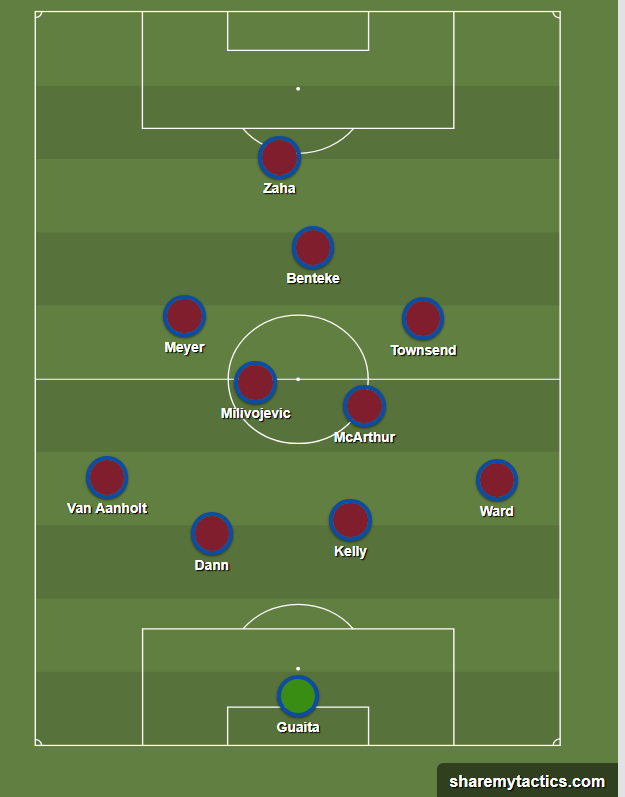
Against a promoted side, Palace were an abomination going forward. Their xG output was just 0.11. There was no plan other than diagonal balls to Christian Benteke from the right-hand side. This team has never been one blessed with creativity under Roy Hodgson, but they’ve always been good at creating transitions, especially down the left when Wilfried Zaha, one of Jeffery Schlupp and Max Meyer, and Patrick van Aanholt combine.
Not only was the output bad in terms of creating shots, but the build-up play was poor. The most touches by this Palace team in wins have generally come from their midfielders. They have been good under Hodgson at controlling the game with his wide-midfielder based midfield four that stays narrow and has easy possession opportunities.
Palace had real trouble beating Sheffield United’s 3-5-2 block. Their leading touch-makers were Joel Ward, Martin Kelly, Luka Milivojevic and Patrick van Aanholt. So, to summarise, the players with the most touches for Palace were three defenders and a deep-lying central midfielder. This isn’t a recipe for success.
Palace were toothless. They completed just three key passes, which is a terrible ratio of one of every 166 passes being a key pass. Max Meyer had no influence between the lines because the Blades defended in a disciplined structure.
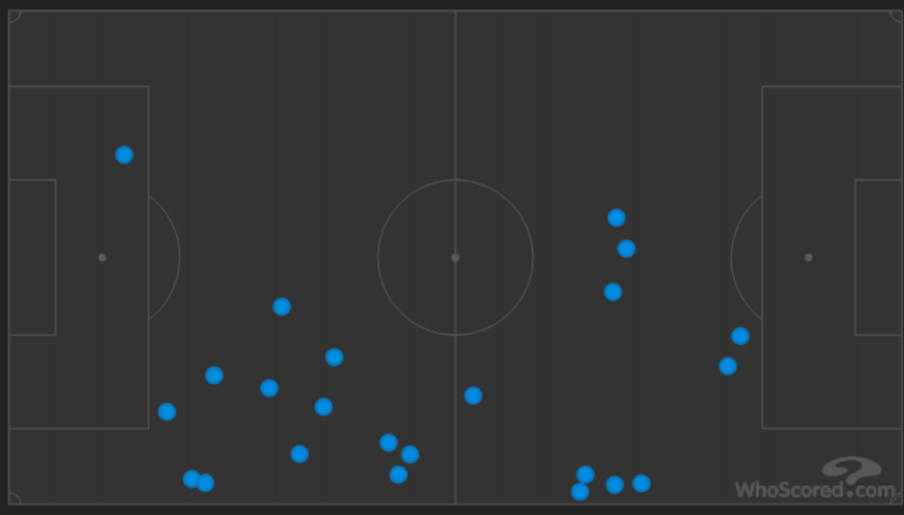
I wrote in May that teams would be freaked out by Sheffield United’s shape simply because a 3-4-1-2 with overlapping centre-backs and an overloading number 10 is not something many Premier League teams have seen before. For Palace, their front two were swallowed up by Sheffield United’s extra centre-half, and Max Meyer was neutralised by the presence of an extra central midfielder in John Lundstram.
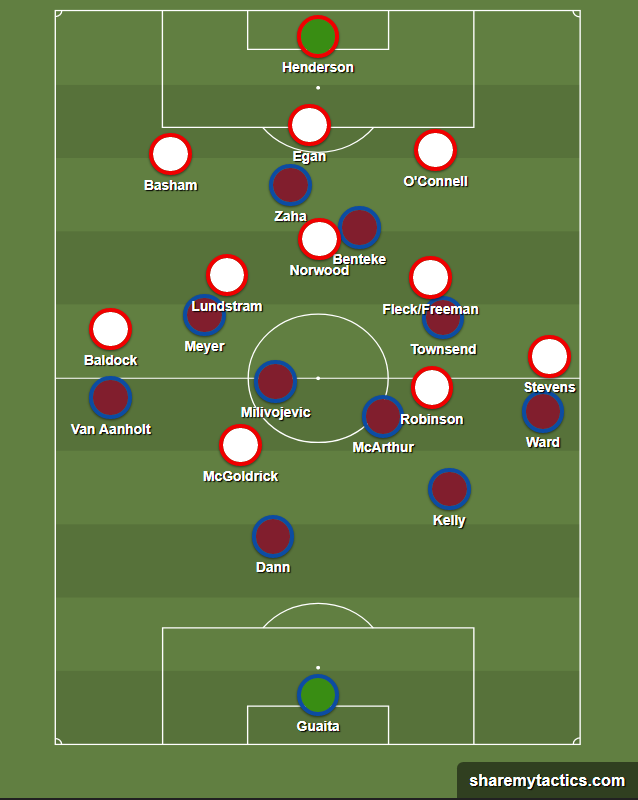
The front two were not at it, either. Zaha clearly struggled in his first game back, and he was marked well by a combination of Chris Basham, John Lundstram and George Baldock on the rare occasions Palace broke into promising positions. Due to the build-up struggles, Benteke was just used as a target man when things became hit and hope. His passes received (below) suggest that the Belgian striker really struggled to get any kind of a foothold, and was made to feed off scraps from the defenders.
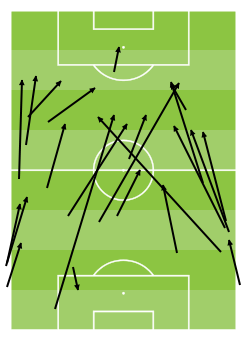
We are only two games into the new season, but there are legitimate concerns to be had about Palace’s attacking structure. Over the first two games, they have not even come close to creating a chance, let alone scoring a goal. The 4-4-2 setup that Roy Hodgson utilises is reliant on dynamism and incisiveness. He does not have the creative players he had at Fulham or West Brom, so he relies on Wilfried Zaha’s pace and incision. If he has an off-day, the tactics don’t work. If Zaha is not pulling defences back and across, there is no space for Max Meyer or Jeffrey Schlupp to operate between the lines and then bring Patrick van Aanholt into play.
The Ivorian will hopefully rediscover form. But this team is just so hugely reliant on him. That is not a hot take or a new piece of information, but from a tactical perspective, we saw on Sunday what happens if Zaha is not quite with it.
Palace’s unambitious window only elevates their reliance on him from a tactical perspective as he is the source of all their goals due to the fact they did not sign a new striker. He may already be shaken mentally by a tough summer, but having to be the entirety of Palace’s attacking structure again brings even more pressure on him. He can handle it, but becoming burned out mentally and physically is something to monitor.

Ultimately, Palace are still solid enough defensively to at least give them a slight advantage over fellow relegation candidates. Roy’s deep block is really hard to get the better of; it nullified Everton’s 4-2-3-1 completely in the first week.
What many overlook, though, is that defence and attack do go hand in hand. If Palace struggle to start attacks and maintain a presence in the final third, they’ll look shakier defensively because more players will have to flood forward, and being forced into long balls and crosses leads to counter-attacks for the other team.
Palace finding some attacking structure and flair in the next few weeks is pivotal to their long-term hopes.
For the full 888Sport.com interview with Nigel Martyn, click here.


