
Crystal Palace’s US ownership picture has moved back into focus after fresh finance analysis warned that a full sale of the club could be difficult, even as the current shareholders consider whether this is the right time to test the market.
The latest update matters because Palace are not drifting through a quiet summer. They have appointed Pierre Sage, are planning another European campaign and are still trying to turn recent success into lasting infrastructure growth.
Against that backdrop, Football Insider has carried fresh analysis from finance expert Stefan Borson, who believes the club’s billionaire owners may be convinced the timing is attractive, but could still find a complete sale hard to execute.
Why Palace’s owners may see a window to sell
The wider sale story first gathered pace last week, when reporting relayed by Sports Business Journal said Palace’s US billionaire owners were exploring a sale and working with Raine Group on the process.
That report named Josh Harris, David Blitzer and Woody Johnson as key US figures in the ownership group, alongside Steve Parish, who remains the executive chairman and the most recognisable day-to-day figure for supporters.
It is easy to understand why the market might be tested now. Palace have raised their profile sharply, with major silverware, European football and a new manager arriving with a clear brief to keep the club moving forward. Parish’s public words around Sage’s appointment underlined that ambition, with the chairman speaking about another European campaign and the desire to target more success.
For sellers, that is a stronger pitch than a mid-table reset. For buyers, though, the question is not just whether Palace are interesting. It is whether the price, stadium requirements and shareholder structure all line up.
The Selhurst Park factor cannot be ignored
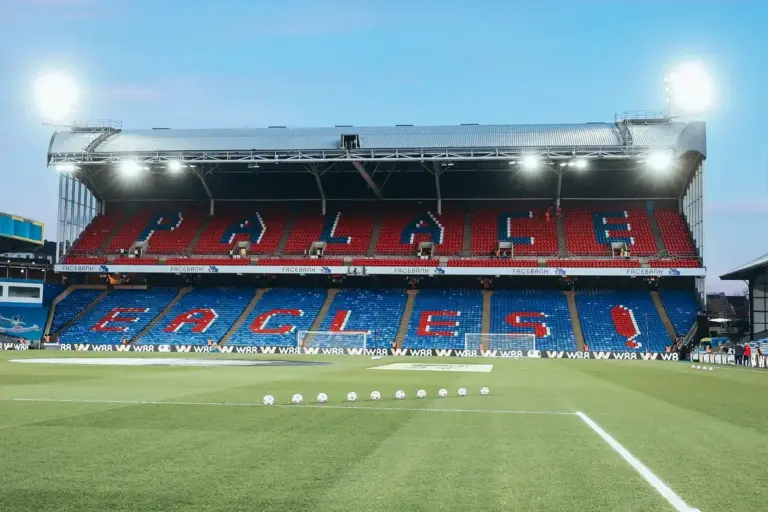
The most important tension is Selhurst Park. Palace have long wanted to modernise the ground, and the sale reporting again pointed to plans to rebuild one stand and push capacity above 34,000.
That is exactly the kind of project that can excite a new owner, because it offers a route to bigger matchday revenue and a stronger long-term commercial base. It is also the kind of project that can complicate a sale, because any serious buyer will have to price in the cost, timetable and planning risk.
That is where Borson’s point lands. Palace may look more valuable because of recent success, but a full sale still needs a buyer willing to take on the whole project rather than simply admire the club’s momentum from the outside.
Pierre is Palace. We are delighted to confirm the appointment of Pierre Sage as Manager.
— Crystal Palace F.C. (@CPFC) June 15, 2026
What this means for Pierre Sage’s first summer
For Sage, the key issue is stability. The new manager has arrived with Palace needing to keep pace in the transfer market, protect their best players and build a squad capable of handling domestic and European commitments.
That makes the ownership question more than a boardroom subplot. A live sale process can shape recruitment confidence, wage planning and the scale of backing available to the football department.
Palace supporters have already seen how quickly ownership matters can spill into football decisions. If the current shareholders believe now is the right time to sell, the cleanest outcome would be clarity rather than drift.
Until then, the story is not simply that Palace may change hands. It is that the club’s strongest modern moment has created both the reason to sell and the challenge of proving to a buyer that the next stage is worth funding.
Read Crystal Palace has previously covered how the ownership picture intersected with the major decision around the club’s billionaire owners, while Sage’s football brief has also been examined through his first Crystal Palace transfer test and the fixture list that now frames his opening months.