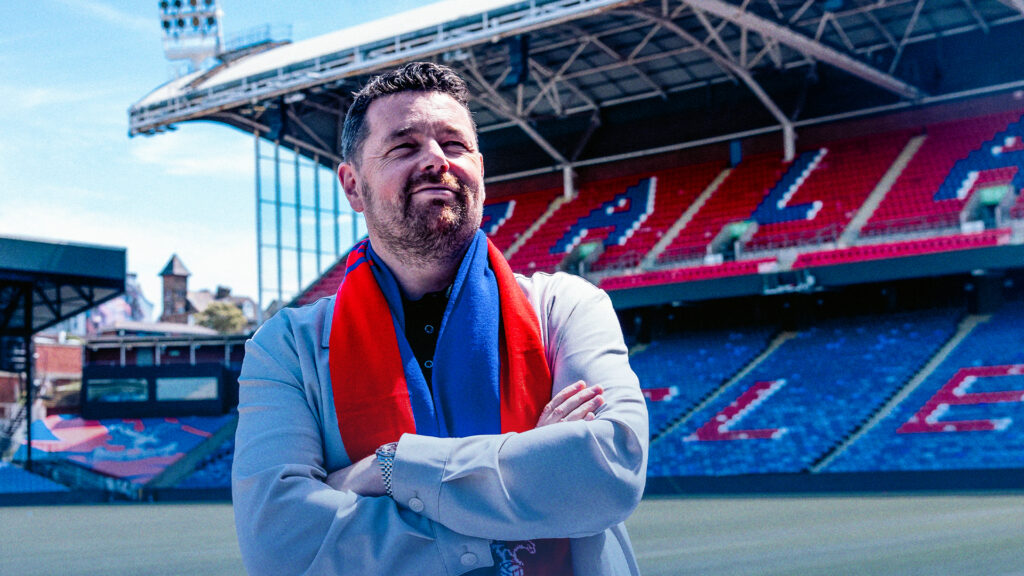
Crystal Palace didn’t bring in Pierre Sage just to keep the seat warm or mimic the blueprint Oliver Glasner left behind. They appointed him because a club looking to cement themselves as a genuine European force needs a sustainable, long-term plan.
The 47-year-old Frenchman arrives in South London on a three-year deal, boasting a Ligue 1 Manager of the Year award, a Coupe de France trophy with Lens, and a highly defined tactical identity. Palace’s official announcement spotlighted an incredible 67.5% win rate during his tenure in France, while The Guardian pointed out that his preference for a fluid 3-4-2-1 system was a driving factor behind the board’s decision.
This matters immensely. Sage isn’t walking into a broken club that requires a total teardown. He inherits a squad perfectly balanced for wing-backs, mobile centre-halves, and two creative number tens operating behind a main striker. His real test at Selhurst Park is more nuanced: maintaining the existing tactical framework, but making sure it no longer depends entirely on emotional momentum.
Plug-and-Play Tactics at Selhurst
On the pitch, Sage’s 3-4-2-1 should play straight into the strengths of Daniel Muñoz and Tyrick Mitchell. Palace’s finest performances over the last 18 months have come when their wing-backs have been unleashed early, rather than being forced to wait for sterile possession to slowly break teams down.
The system also gives the midfield contingent—Adam Wharton, Daichi Kamada, and Jefferson Lerma—a very distinct platform.
When you’re running a two-man midfield, you cannot afford massive gaps between your press and the back three. At Lens, Sage’s side thrived by using the first line of pressure to push the opposition wide, allowing the wing-back and wide centre-back to effectively trap teams against the touchline.
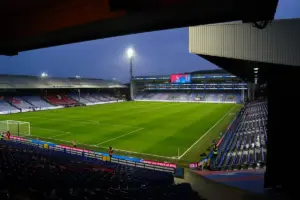
For Palace, this isn’t just about shifting magnets on a tactics board. The true measure of success will be whether Sage can keep the side compact enough to withstand rapid Europa League transitions without losing that aggressive, front-foot identity that makes Selhurst Park such a tough place to go.
The immediate tactical priorities are clear:
- Instigating much quicker counter-pressure the second possession is lost.
- Developing slicker wing-back rotations to dismantle stubborn, deep blocks.
- Ensuring one central midfielder remains disciplined and anchored to the back three.
- Maintaining a rock-solid ‘rest defence’ when Palace commit five players forward in attack.
The Transfer Market Will Define the Reset
While Sage’s tactical philosophy fits the current squad like a glove, it doesn’t take the heat off the recruitment team. If anything, it makes their summer brief far more specific.
Reports suggest Palace are actively targeting midfield and central-defensive recruits this summer. In a 3-4-2-1, those positions are the absolute lifeblood of the team. A back three only works if the outside centre-backs are completely comfortable defending large spaces aggressively. Likewise, a two-man midfield can only control a game if at least one player can receive the ball under intense pressure, turn, and immediately progress it forward.
Because of this, any new arrivals cannot simply be generic squad depth. They have to be hyper-specific system pieces.
Steve Parish and the scouting team are juggling a complicated balancing act. While looking to recruit, they also have to fend off intense market interest in current stars like Maxence Lacroix, Wharton, Muñoz, and Ismaïla Sarr. The ideal scenario for Palace is to retain that core continuity for a fast start, while sprinkling in two or three high-quality additions to raise the squad’s floor for a demanding four-competition campaign.
Grinding Out a European Standard
Palace can no longer treat continental football as a romantic, one-off bonus. To survive and thrive across multiple fronts, the club must establish repeatable, elite habits.
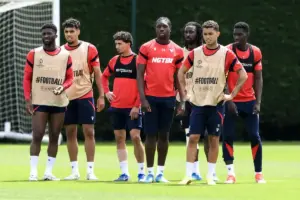
Sage hinted at this challenge during his first interview with Palace TV, openly discussing the need to manage training loads for players returning from the World Cup while ensuring the squad hits the ground running. This isn’t a standard, leisurely pre-season. With international players trickling back at different stages, a brand-new coaching staff settling in, and a fan base used to recent silverware, the pressure is on from day one.
Palace have brought in Sage because they believe he can modernise the club’s approach without diluting its identity. The 3-4-2-1 formation gives him a fantastic foundation, but the danger lies in assuming the transition will be effortless just because the shape looks familiar. Glasner wrote his name into Palace history; Sage’s job is to take those historic highs and turn them into a relentless, weekly routine.
Read more on the latest updates: Head over to our Crystal Palace transfer news page to see how Pierre Sage is plotting his first four major summer signings.



Comments.
Loading comments…